Osmosis
Lester Kielstein
With Osmosis, Lester Kielstein develops a long-term photographic inquiry into the contemporary regimes of visibility surrounding migration at the German-Polish border . Emerging from a journey of more than 13,000 kilometers across the country, the project observes a landscape marked by tension: on one side, the highly visible and media-amplified mobilization of the far right; on the other, the quiet, often overlooked traces of migration—particularly along the Polish–German border. Between these poles, Osmosis asks what circulates, what is held back, what disappears, and what becomes visible only when we slow down and look more closely.
The title refers to the physical process of osmosis, in which particles pass through a semi-permeable membrane: some are allowed through, others are filtered out. Kielstein adopts this phenomenon as a political metaphor for the European public sphere, where migrant narratives circulate unevenly. Refugees are widely spoken about—in political discourse, media debates, and statistical frameworks—yet their own voices rarely reach the public arena, and when they do, they are often simplified, instrumentalized, or pre-structured. This imbalance—who is seen, who is allowed to appear, and who remains invisible—lies at the heart of Osmosis.
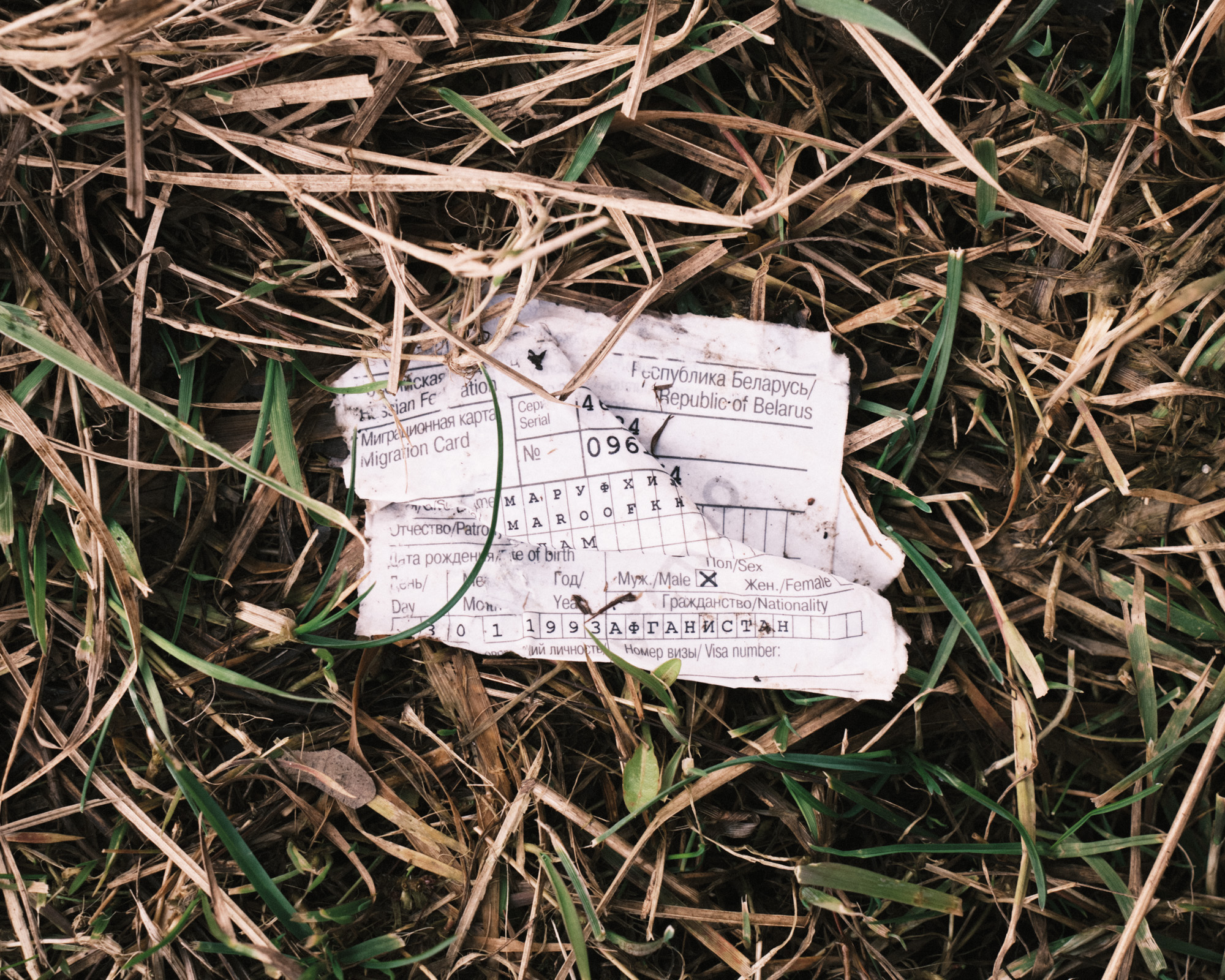
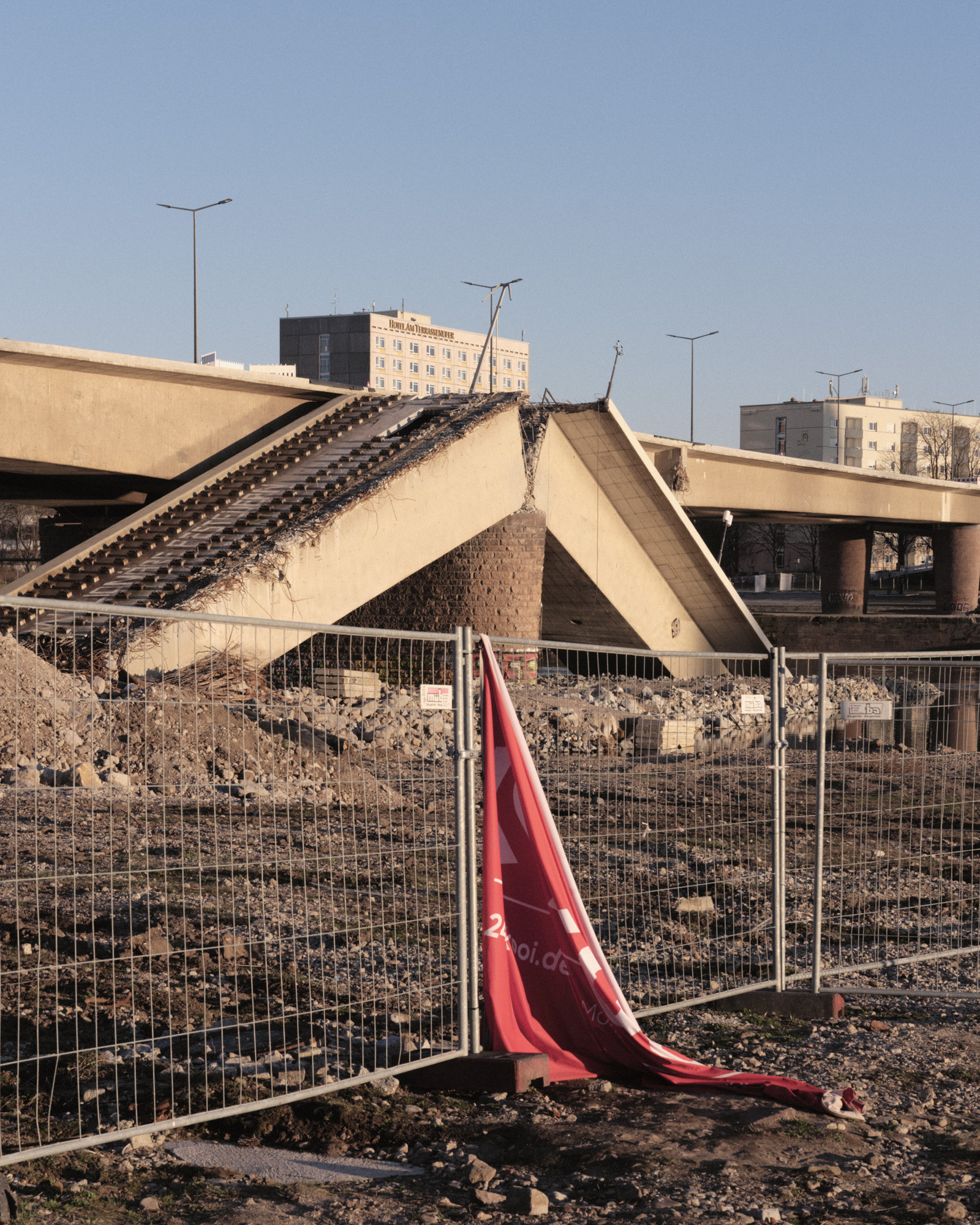
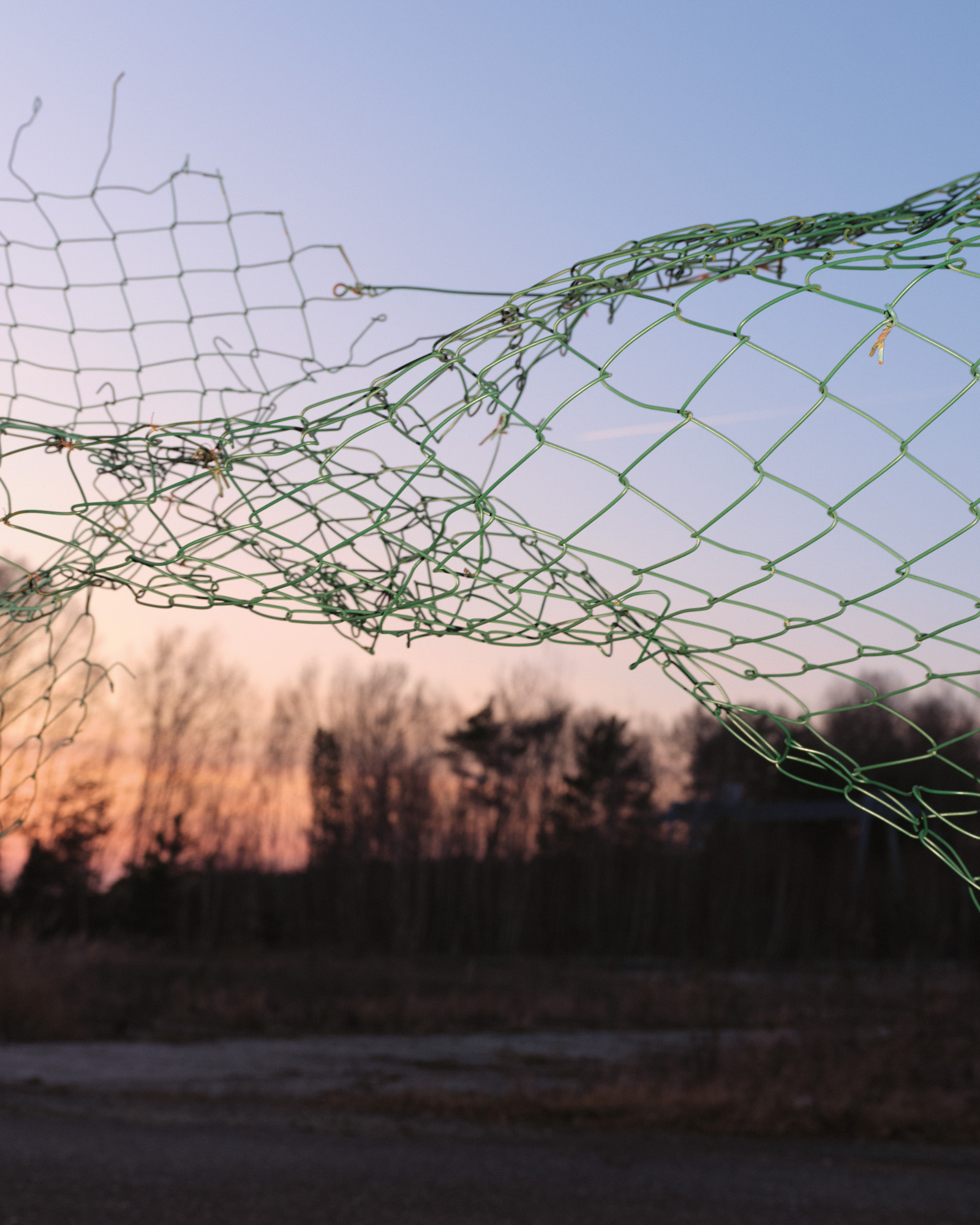
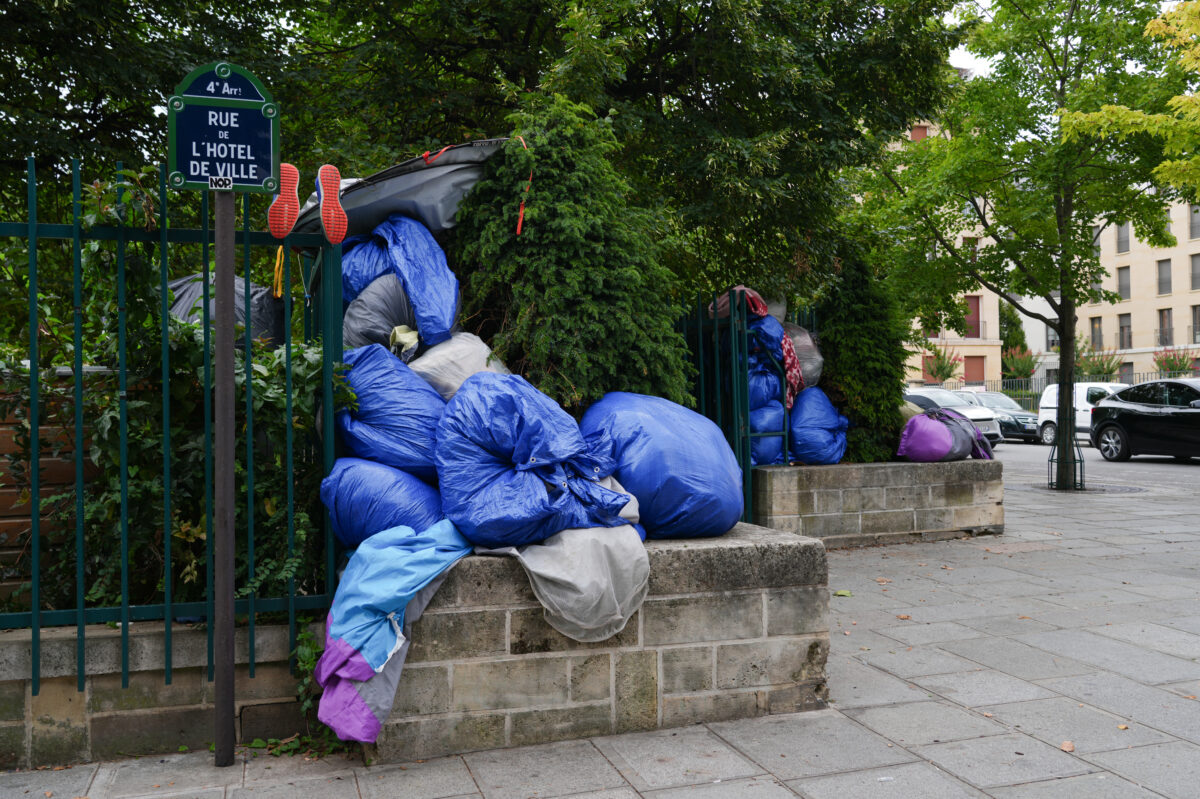
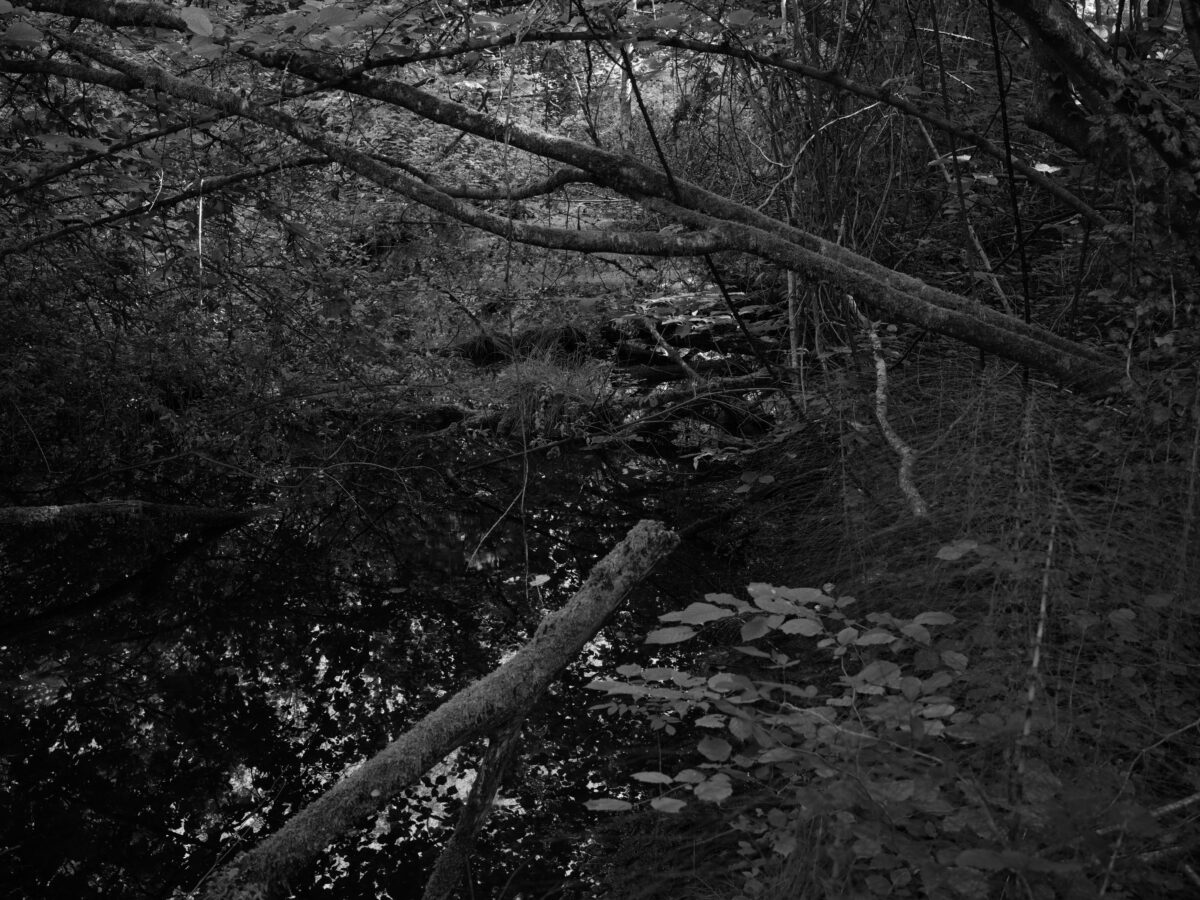
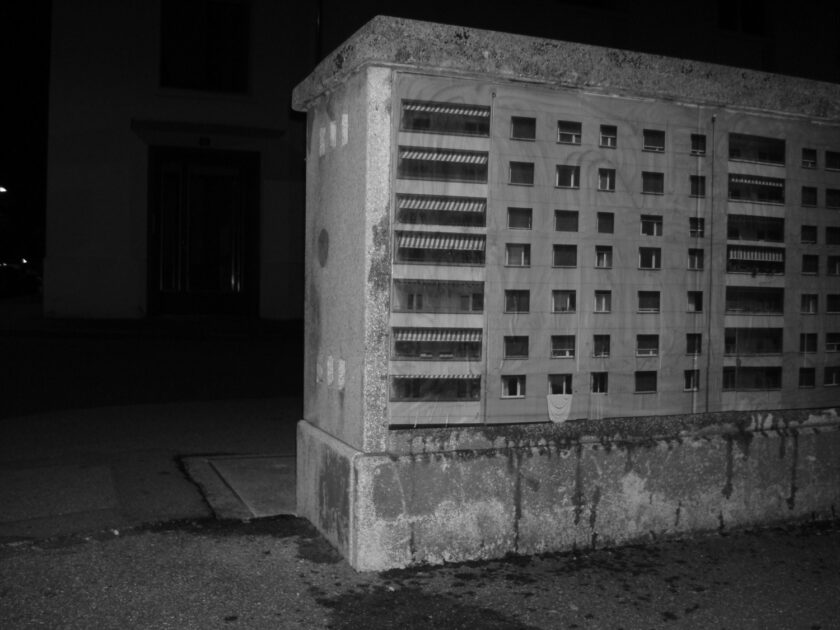
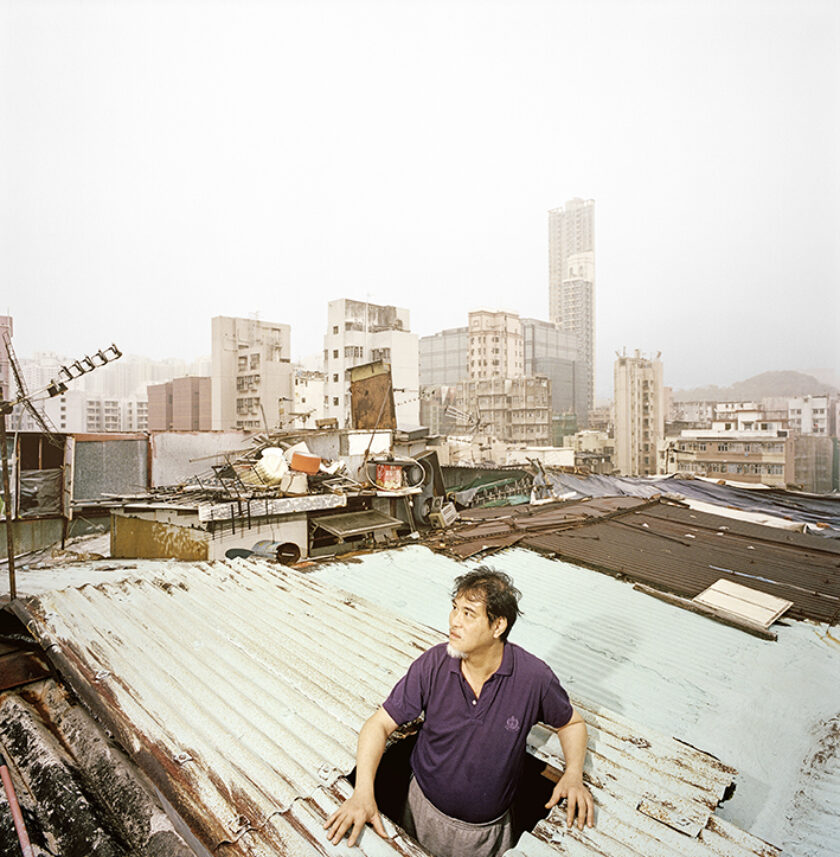
Rather than representing migration through direct portraits or linear narratives, the artist deliberately shifts perspective. Osmosis is composed of fragments: discarded objects, border landscapes, administrative documents, everyday infrastructures, rivers, fields, power lines, and zones of transition. These elements function as indirect testimonies of a presence that is rendered invisible by systems of control, media reduction, and collective forgetting. The photographs do not seek to “prove”; they make perceptible. They do not assert, but open a space of attention in which the notion of witnessing moves away from spectacle toward the ordinary and the marginal.
The book form of Osmosis is integral to the project. It unfolds as a reading and viewing experience shaped by ruptures, pauses, and absences. White pages, barely visible images, and recurring motifs generate a slow, almost breathing rhythm, in which disappearance itself becomes part of the visual language. The book does not fill the gaps—it holds them open. It places viewers in an active position, asking them to attend to what is not immediately visible, to endure incompleteness, and to recognize migration as a condition shaped by interruptions, losses, and omissions. In this economy of restraint, absence becomes material and fragmentation a method.
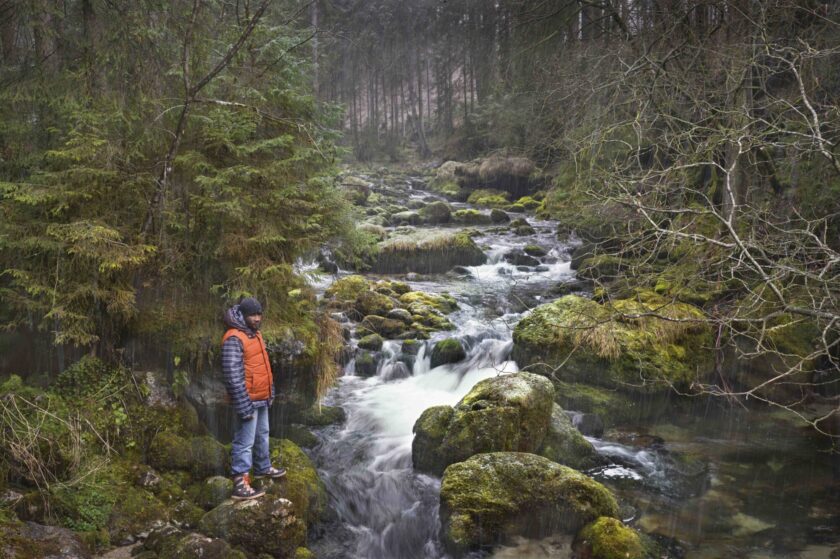
This attention to thresholds and passages permeates the entire project. The photographed sites are often liminal spaces: roadsides, riverbanks, forest edges, rural zones, functional architectures, administrative traces. They appear neutral at first glance, yet are deeply embedded in relations of power. These are places of waiting, crossing, and filtering. Rather than adopting the dramatic imagery of “crisis,” Kielstein reveals a terrain where migration becomes visible through remnants and minimal signs: a piece of paper, a discarded garment, a trace in the grass. This aesthetic of the trace resists voyeuristic visibility and protects those concerned from renewed objectification. The gaze shifts—from individuals to conditions, from faces to infrastructures, from fixed narratives to subtle indications.
Within the framework of Vulnerabilities, Osmosis understands vulnerability as a politically produced condition, shaped by systems of control and hierarchies of visibility. The project exposes both the vulnerability of moving bodies and the fragility of the representational systems that claim to speak about them. What can an image do when so much is filtered, suppressed, or rendered invisible? How can photography bear witness without exposing? How can images resist becoming another form of visual violence? By working through fragments, silence, and restraint, Kielstein develops an alternative image ethics—a practice of visual care, in which seeing becomes a situated, attentive, and responsible act.
Osmosis does not present migration as a singular event, but as a structure: a condition shaped by thresholds, regulations, and visible and invisible borders. The project confronts us with a fundamental question: what does it mean to see today, in a world where stories are filtered, hierarchized, and instrumentalized? And what remains visible when we choose to look more carefully?
Year of production: 2025
Watch the video interview with Lester Kielstein on our YouTube channel.